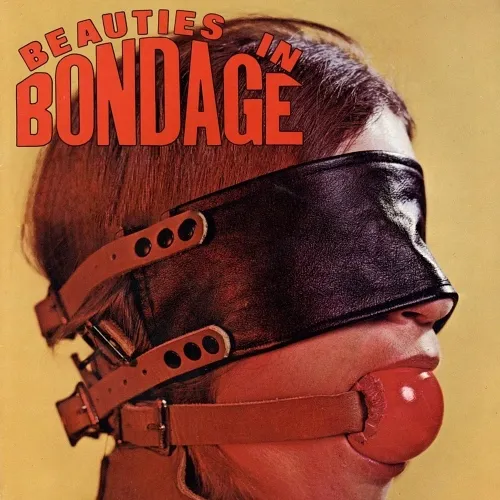
Tied to the Times: Inside the House of Milan

A look back at one of the 1970s’ most prolific bondage publishers

Long before the internet made niche interests easy to find, fans of rope, leather and restraint relied on the mail. Plain brown envelopes, small-print order forms, and a handful of publishers willing to serve an audience the mainstream newsstands ignored. One of the busiest of those was the House of Milan Corp.

A founder who saw the gap

The company’s story starts with Barbara Behr. When she turned 21, old enough to legally buy bondage material, she found there was very little out there to buy. So she started making it herself, launching her own company just as attitudes toward adult publishing were beginning to loosen. Her timing was far kinder than that of the legendary John Willie, whose work arrived a decade too early to enjoy the same open market.

At its height, House of Milan was a genuine one-stop shop for the devotee: two separate lines of B&D magazines, two correspondence clubs, a mail-order division, short films, paperbacks and its own range of leather restraints.
The flagship magazines

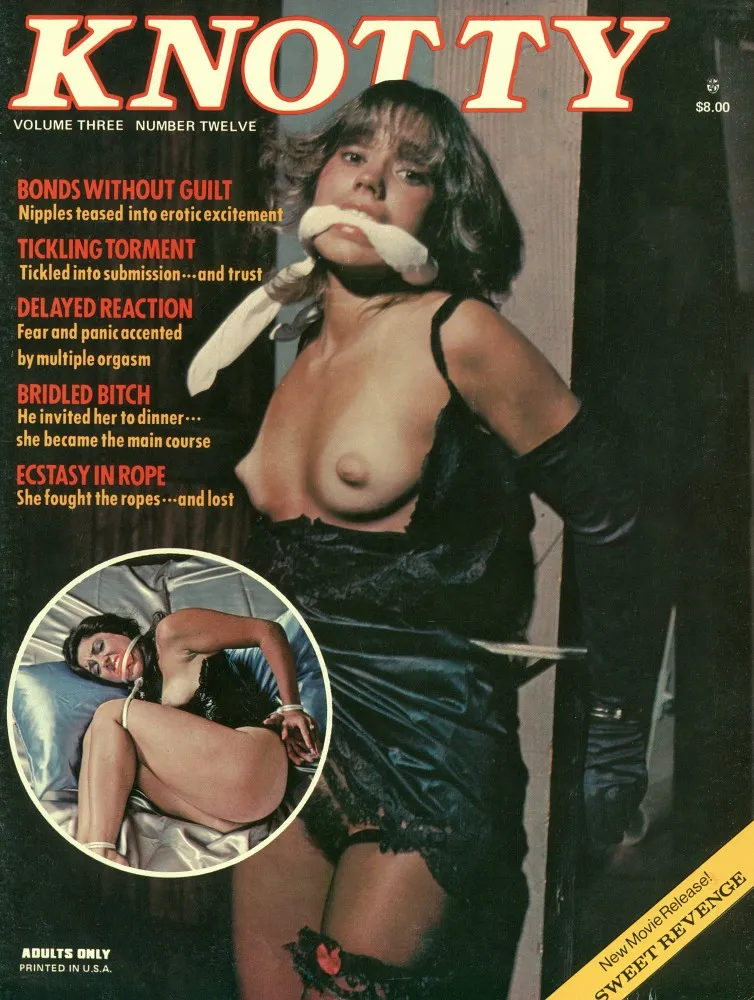
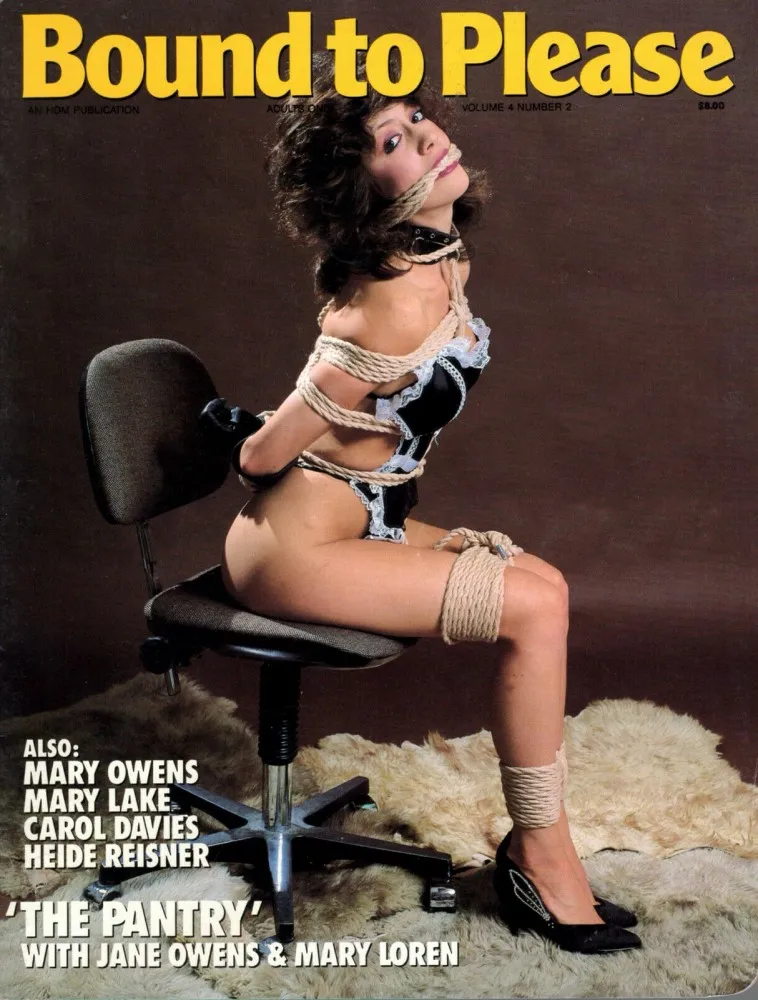
Behr’s first line, and her personal favourites, were HOGTIE, KNOTTY and BOUND TO PLEASE. They carried a consenting-adults ethos: alongside the photo sets came personal ads from readers, a lively letters page and regular artwork from the illustrator known as The Bishop. Custom leather garments, original restraint designs, nylons and heels all featured heavily.

A fourth title, NAKED BONDAGE, joined the line with a simpler pitch that did exactly what its name promised: solo and duo photo sets of gagged, roped and strapped models.
The Bishop and Fanni Hall

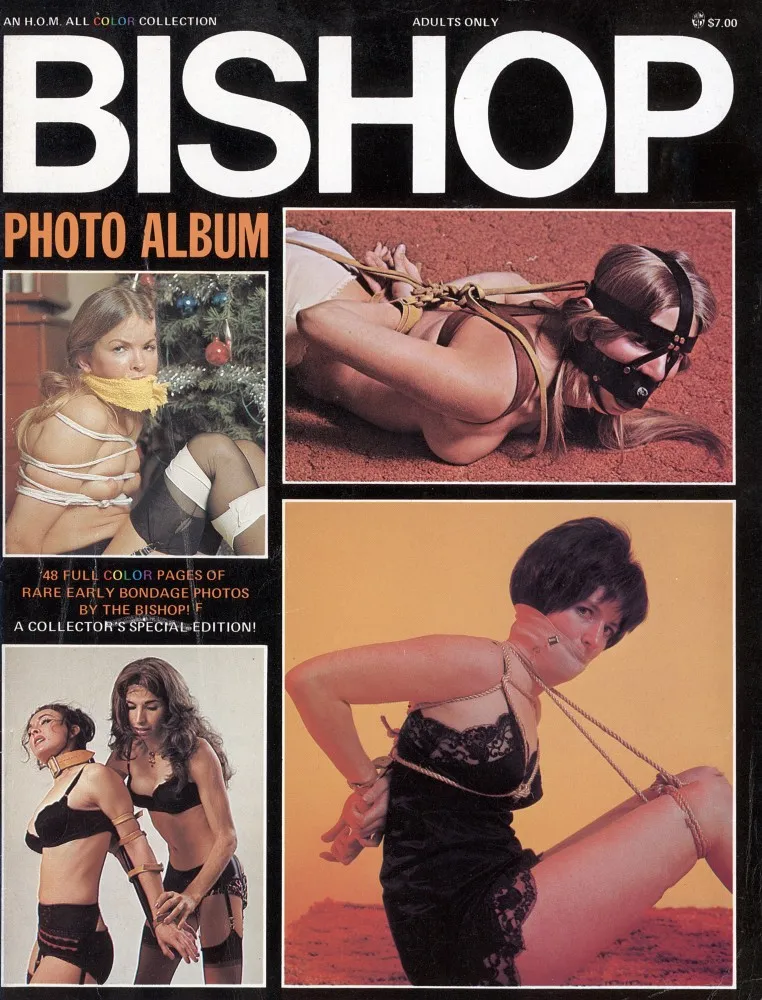
Illustrated fiction was central to the House of Milan identity, and The Bishop was its star. His comic heroine Fanni Hall first ran in KNOTTY before being spun out into her own releases:

  • BISHOP: The Complete Fanni Hall, collecting the KNOTTY strips.
  • BISHOP: Bunzie Gets a Surprise, a brand-new digest-sized story.
  • BISHOP: The Plot Thickens, a full magazine-sized continuation.
Paperbacks: F.E. Campbell and the Butler Fellowes

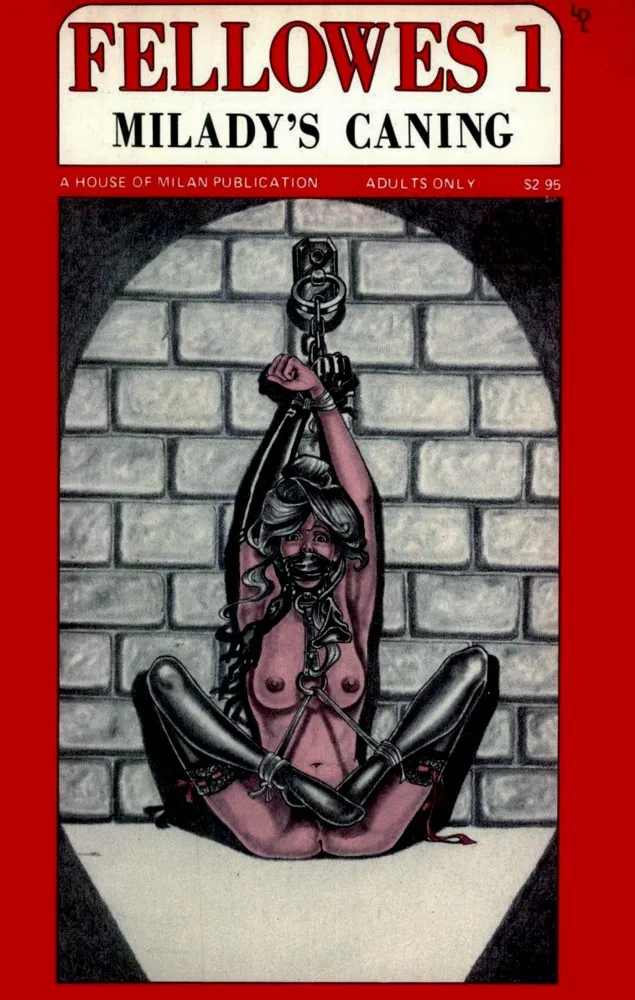
On the prose side, the company’s headline author was F.E. Campbell, with sixteen paperbacks in print and another sixteen in the pipeline. His novels explored captivity, cruelty and devotion to a dominant mistress. Perhaps the most charming format of all was the Butler Fellowes series: mini-paperbacks illustrated by newcomer Ashley, starring a butler who administers discipline with impeccable manners. Four were released early on, with eight more planned.
A rougher second line

In 1975 the company launched a second magazine line for readers who wanted something more intense: KIDNAPED!, BONDAGE CLASSICS, CAPTURED and WHIPMASTER. These moved away from the playful tone of the flagship titles toward staged “impromptu” scenarios, more strenuous positions, tighter rope work and suspension. Short films such as Attacked (No. 110) and Interrogation (No. 112) followed the same approach.

Clubs, leather and mail order

House of Milan also ran two correspondence clubs: Aggressive Women, featuring only dominant ladies, and Latent Image, which catered more to submissives. Both worked as ad-driven contact magazines at a time when that was one of the few ways like-minded people could find each other.

The leather line came about almost by accident. Behr couldn’t find restraints good enough for her own shoots, so she had her own made. The result was a range of heavy-duty gear with quality hardware and a real emphasis on safe design. Its best seller, nicknamed the “Play and Breathe Too”, was a shoulder harness with cuffs at the back that held the arms behind the wearer without anything running up to the collar, a smart fix for a common and risky setup.

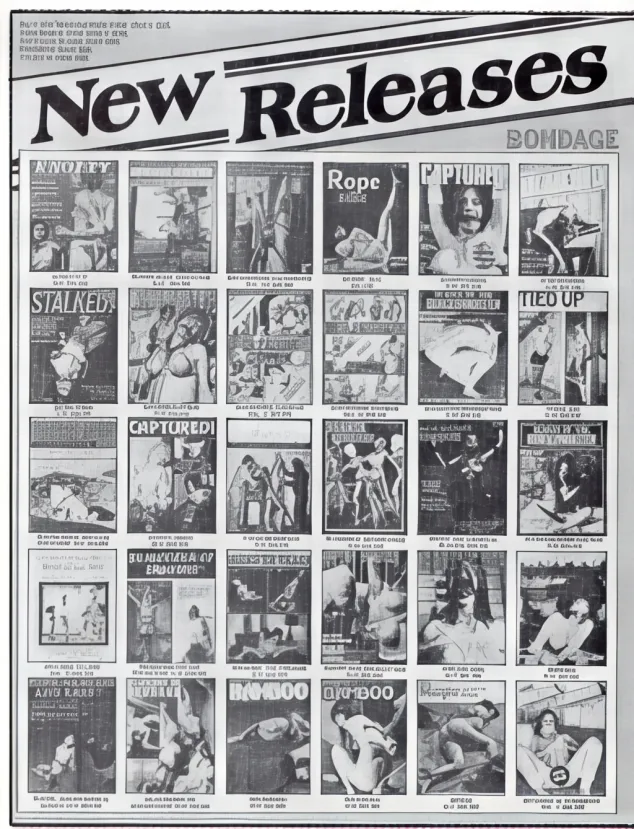
Rounding everything out was a mail-order division stocking B&D titles from major US and European publishers at discount prices. Customers simply wrote in for the free brochures and, naturally, stated their age.
Why it matters

House of Milan is a perfect example of how the 1970s fetish press really worked: small, founder-driven, and built as much on community (letters, contact ads, clubs) as on content. Behr’s operation spanned photography, comics, pulp fiction, film and gear, and the fact that she started it because she couldn’t find what she wanted says a great deal about the scene at the time.

Bondage – BDSM

2

Harmony Communications 

Bondage Life - Harmony Communications

The Bondage Company.

Monthly magazines, films, and video cassettes featuring fully dressed, semidressed, or fully undressed ladies in tight, scrumptious “Love Bondage.” For the truly finicky, there are whole photo sections of bathing cap bondage, tennis shoe bondage, cheerleader bondage, and all the other bondage fantasies Harmony has managed to hear about and then portray.

To keep customers apprised of what’s old and new in the Harmony inventory, a free, lavishly illustrated catalogue sheet is sent out like clockwork each month to the company’s mail-order buyers. 

Since 1976, Harmony has been earning the approval of bondage lovers by not only producing its own contemporary materials, but also reprising the classic “Damsels in Distress” photo collections of pioneer bondage producers Irving Klaw and John Willie. Harmony has also published full magazine retrospectives of the complete photo collections of such celebrated mail-order bondage stars as Lyndia, Cheryl Rothman, Sally Roberts, Joanne Link, Judith Wilson, and others.

Most of Harmony’s magazines, films, and videocassettes are devoted to pictures of pretty women tied up and gagged in either their underwear or various bondage costumery, although there is also a generous quantity of fully nude bondage magazines in the Harmony output. Whatever the visual content, Harmony avoids offering anything that smacks either of violence or tastelessness, doting instead on its soft “Love Bondage” theme in which the Bound Beauty is characterised as an accomplice with her lover in a mutual act of pleasant foreplay. With Harmony, the pretty lady is all tied up because she wants to be.

One of Harmony’s accessory materials are the storyline videocassettes from Arrow, which star Sally Roberts and Susan Blair. So far, Harmony has been releasing one of these hour-long videocassette programmes each month.

If bondage is one of your pleasures, you should request being placed on Harmony’s monthly mailing list (you must send $3 and buy at least two Harmony publications every six months to remain active). Send Harmony the $3 for current catalogues, a signed statement that you are 21 years old or older, aware that you are requesting sexually oriented material, and that you want those monthly brochures.

Box 780 North Hollywood, California 91603

The AI Summary

Harmony Communications was a prominent publisher of fetish, BDSM, and bondage magazines based in North Hollywood, California, during the 1970s and 1980s. Founded by Robert Q. Harmon (who was also associated with Harmony Concepts Inc.), the company specialized in high-quality, photographic, and editorial content focusing on bondage, particularly in magazine, tabloid, and special issue formats. 

Key Publications and History

Bondage Life: The company’s flagship publication, titled BONDAGE LIFE; The Magazine For and By Bondage People, ran for at least 85 issues beginning around 1976/1977 and continuing through the 1980s and into the 1990s. It featured b/w and color photography, reader letters, fiction, and articles.

Other Titles: Harmony Communications released a variety of niche bondage magazines during the 70s and 80s, including:
Bondage Fantasies (1991)
Love Bound (1970)
DeSade Journal (1977)
Uptight (1982)
SWAT – Spanking (1978)
Bondage World (HCI)
The Bound Beauties of Harmony (1980)
Simone Devon’s Favorite Bondage Models (1988)
Woman/Slave (1982)

Production Context: The magazines served as a marketing and documentation vehicle for the videos and photo shoots produced by Harmony Concepts, frequently featuring popular fetish models of the era, such as Jennifer West, Libby Curtis, and Juliet Maitland.

Content and Style: Many issues contained 64-80 pages, using a mix of b/w and color photographs. They catered to a dedicated, mostly mail-order audience, providing a “behind-the-scenes” look at the bondage photo industry. 

Robert Q. Harmon is often credited with creating and publishing these magazines, making Harmony Communications a significant player in the niche erotic publishing scene of the 1970s and 80s. 

Great Selection of Books From Irving Klaw and Ed Mishkin Just Added

Discover a curated selection of unique and rare books from the Nutrix and Mutrix range, many in excellent to good condition. These books have been carefully sourced from a single collection, showing signs of care and proper storage. For more details on any specific title, feel free to contact me.

1

Original or Re-Print – BDSM Magazines

When browsing magazines within the genre of BDSM, you frequently see stated that the magazine in question is either an original or a re-print. Originals always achieve more money than equivalent re-print versions.

So, in order to explain why that is, we need to have a little look back at history and the laws in the UK that regulated pornography during the 1960’s right through to the early 1990’s 

The UK had a very different outlook on pornography regulation than most other developed western countries, who had legalised hardcore pornography during the 1960’s. This left the UK out on a bit of limb in terms of what could be easily obtained, as it was also illegal to import these types of magazines from more liberal countries.

This, of course, did not stem the demand; it just created an underground market for magazines from the USA and Europe that had been illegally brought back into the UK. It was not long before enterprising individuals saw a gap in the market for copying and selling these magazines in an under-the-counter way.

So, the re-print came into existence, and it was just a copy of an original magazine. Quality, as you can imagine, varied greatly with some being excellent and others quite poor. It is usually fairly easy to spot the difference between an original and a re-printed version.

Things to look out for:

Printing is generally not quite as sharp as the original.
Publisher’s details have sometimes been removed.
Sometimes the advertisements have all been removed.
Cover pricing may be different from the original.
The quality of the paper is generally not as good.

But, after noting all of the above, it must be said that some of these re-prints are certainly as collectable as their original counterparts just because of their rarity. Nothing of course beats the collectability of an originally printed and published magazine.

Original – Re-Print
Original – Re-Print